
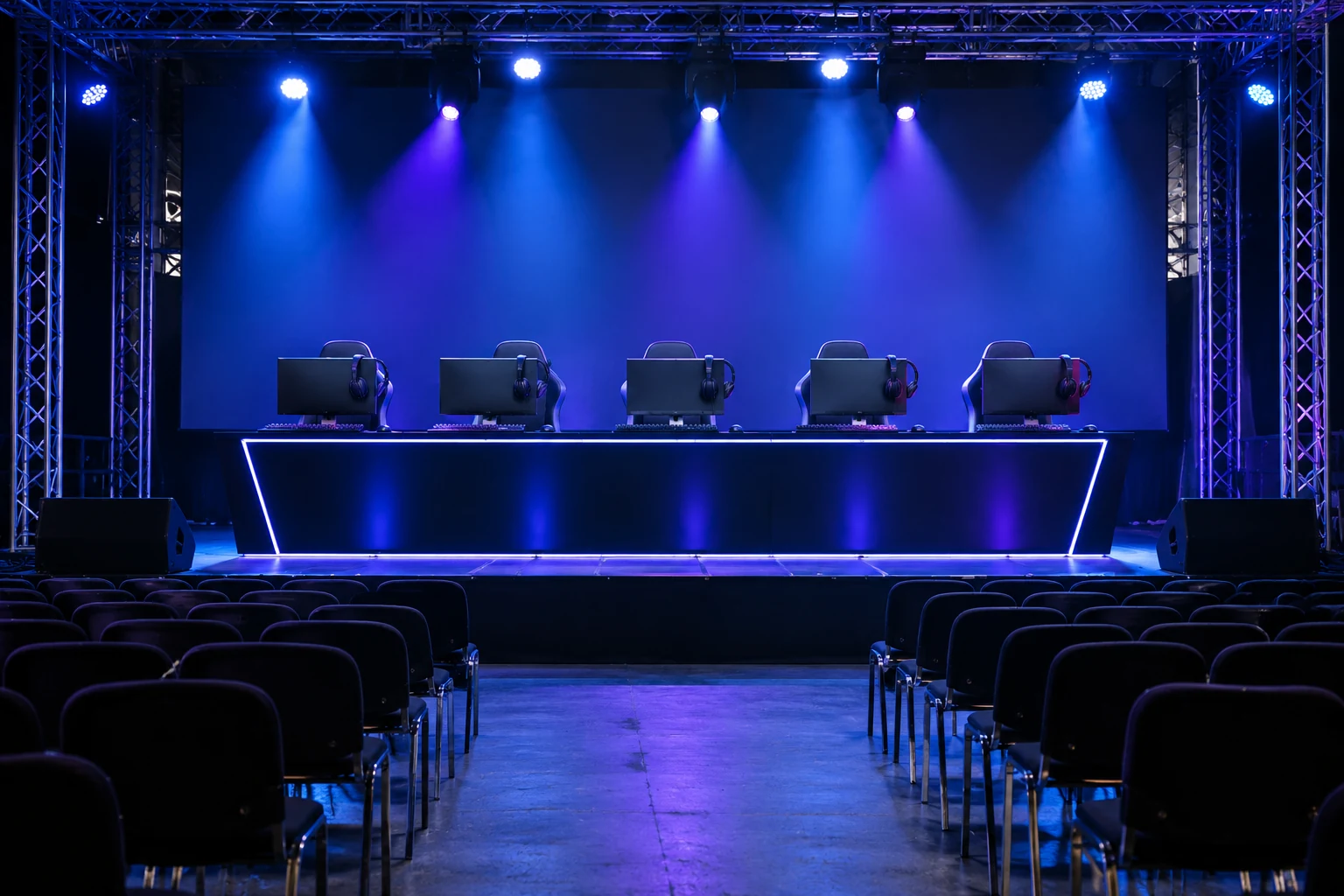
Esports is organised video-game competition. It has rules, scheduled matches and results, whether two Auckland school teams are playing a Rocket League final or international professionals are meeting at the League of Legends championship. The audiences and budgets are hardly comparable.
In Aotearoa New Zealand, esports takes place in school clubs, university spaces, Discord communities and live venues. Players can enter local leagues, join tertiary clubs or aim for squads such as the E Blacks. These aren't steps everyone must climb in order. For plenty of people, competition is a way to spend time with friends rather than a route to a contract.
What is esports, and how is it different from gaming?
Esports, short for electronic sports, means video-game competition with an agreed format and a result. Players can compete alone or as a team. Organisers set eligibility, schedules, dispute procedures and the rules for deciding a winner. A tournament might have rankings, playoffs and prize money. It can still be esports without a cash prize.
A ranked VALORANT match is competitive gaming. Playing in a scheduled school league or an open tournament fits the esports label more clearly. A Fortnite session with friends, a Minecraft stream or a favourite Twitch creator belongs to gaming culture, but isn't automatically an esport. Organised player-versus-player matches or repeatable judged challenges can turn a game into a competitive event.
Unlike traditional sports, esports competitions depend on commercial games that publishers control. Riot Games, Valve and Epic Games can influence their games' competitive scenes through updates, maps, characters and tournament permissions. There is no universal rulebook covering every title, and a patch can change how teams play overnight.
Which esports games suit different players?
Pick a competitive game for the decisions it asks you to make, not just the size of its audience. Rocket League may appeal to someone who already enjoys football; a tactical five-player shooter rewards close communication and careful planning. A game that looks exciting in a highlight reel may feel very different after a month of practice.
| Genre | Recognisable games | What competition tests | Useful fit |
|---|---|---|---|
| MOBA | League of Legends, Dota 2, Mobile Legends: Bang Bang   | Map control, team roles, objectives and long-form strategy | Players who enjoy planning and coordinating with a team |
| Tactical FPS | VALORANT, Counter-Strike 2  | Aim, positioning, information, economy and round-by-round decisions | Players who like deliberate tactics under pressure |
| Hero shooter | Overwatch, Marvel Rivals  | Character combinations, team fights and adapting to opponents | Players who enjoy distinct roles and rapid teamwork |
| Battle royale | Fortnite, PUBG, Apex Legends  | Survival, rotations, resource management and consistency across matches | Players comfortable with uncertainty and changing situations |
| Sports and racing | Rocket League, eFootball, EA Sports FC, Trackmania  | Spatial awareness, timing, execution and racing lines or sporting tactics | Sports fans and players who enjoy measurable mechanical improvement |
| Fighting games | Tekken, Street Fighter 6, 2XKO  | One-on-one reads, spacing, matchups and execution | Players who prefer direct competition and individual accountability |
| Mobile strategy | Clash Royale, Mobile Legends: Bang Bang | Timing, deck or hero choices, fast decisions and resource control | Players who prefer a phone-based competitive format |
These genres do not represent a fixed list of games offered by New Zealand organisers. New Zealand Secondary School Esports has included League of Legends, Rocket League, VALORANT, Marvel Rivals, Trackmania, Clash Royale and Mobile Legends: Bang Bang. Specific events decide their own game roster, age restrictions, platforms and team sizes.
Tactical shooters reward repeated, disciplined calls; a fighting game leaves little room to hide individual mistakes. Even a free-to-play title may demand compatible hardware, optional spending and many hours learning how its competitive format works.
Why watching esports is part of gaming culture
Plenty of esports fans never enter a bracket. Fans watch livestreams, highlights, interviews and analysis on Twitch or YouTube. At a LAN event, players share a physical venue and the crowd can react to a round as it happens. A shoutcaster describes the play, an analyst explains decisions, and an observer selects the in-game camera shots for the broadcast.
The jargon helps a new viewer follow what's happening. A clutch is a difficult win pulled off under pressure; a scrim is a practice match. The meta refers to strategies players currently regard as effective, which can change after a patch. During a VOD review, a team watches recorded play to examine positioning, communication and decisions.
Following an esports team doesn't work quite like supporting a rugby club. Fans switch games, follow individual players between organisations and gather in a creator's Discord as readily as an official channel. Watch parties, memes, fan art, cosplay, LANs and arguments over a match carry the conversation beyond the final score.
How the esports scene works in New Zealand
NZ Esports and the E Blacks
The New Zealand Esports Federation (NZESF) supports competitive gaming, including development pathways and work with schools, tournament organisers and communities. The federation says Sport NZ recognised it in 2020. Participation, fair competition and player wellbeing are part of its remit.
The E Blacks represent New Zealand in international esports. Their name recalls the All Blacks, but national squad selection is not a salaried club contract. E Blacks teams have appeared at competitions associated with the International Esports Federation (IESF) and Global Esports Federation (GEF); published profiles include Dota 2, eFootball and sim-racing competitors.
School esports: from lunchtime club to LAN Clash
Through NZ Secondary School Esports (NZSS), pupils can represent their schools in organised matches. Autumn Clash and Spring Clash run as seasonal online competitions; LAN Clash brings qualifying teams to a venue. Joining a school team involves schedules, eligibility and digital conduct rules as well as playing the game.
At Auckland's Armageddon Expo, the 2026 NZSS LAN Clash put VALORANT and Marvel Rivals school teams on a 50-PC setup with live production. Organisers reported 38,000 visitors to Armageddon overall; that is not an esports spectator or competitor count.
NZESF introduced the Junior E Blacks pathway in 2026. School competitions helped identify a small group of Rocket League and VALORANT players for coaching, mentoring and replay sessions. Junior development did not guarantee a place on the senior E Blacks squad.
Universities, clubs and places to play
University life offers another entry point. The NZ Esports Uni Series (NZEUS) began in 2026 as a tertiary competition pilot supported by University and Tertiary Sport New Zealand (UTSNZ). Outside national events, student clubs organise social games, tournaments and broadcasts for their own members.
At the University of Auckland, the Esports Arena has gaming PCs and consoles. The Auckland University Esports Club (AUEC) also hosts activities including fighting-game sessions and student broadcasts. Meeting in person can help players find teammates or access equipment they don't own. Opening conditions and charges need checking. Outside Auckland, school teams and online communities connect players in Canterbury, Wellington and across the motu. Online leagues reduce travel; regional LANs let teams meet face to face.
Māori communities and the meaning of participation
Rotorua-based Digital Natives Academy takes an Indigenous-centred, Māori-focused approach to gaming and creative technology. It builds opportunities for rangatahi (young people) while connecting digital skills to te ao Māori, identity and community leadership.
The Māori-led Victory Up school initiative has linked esports with friendships, education and conversations about healthy gaming habits. For some participants, confidence, volunteer experience and stronger whānau connections matter as much as results.
How to get started in esports in Aotearoa
- Choose one game and format. Decide whether you prefer singles, a pair or a larger team. Try the game on hardware you already own before paying for an upgrade.
- Find an event you're eligible for. School pupils can check NZSS; tertiary students have clubs and NZEUS; others can look for open qualifiers and community organisers. A ranked queue is practice, not registration for a separate tournament.
- Read the rulebook. Check age, residency, region, platform, team size, anti-cheat, identity verification, fixtures and substitutes. An online event may still restrict where competitors can physically play.
- Find teammates with a similar schedule. Reliable communication and realistic practice plans beat a team of high-ranking strangers who never meet. School clubs, university groups and moderated Discord servers are starting points.
- Play, review, repeat. Try a community league or lower division. Review a couple of decisions after each match, work on one weakness and judge progress over weeks rather than one evening.
NZESF's Academic Accredited Tournament Organiser scheme outlines safety and integrity expectations for school organisers. Elsewhere, look for identifiable admins, published rules, visible results and a complaints process. Those details tell a beginner more than an eye-catching prize pool.
What actually happens in an esports tournament?
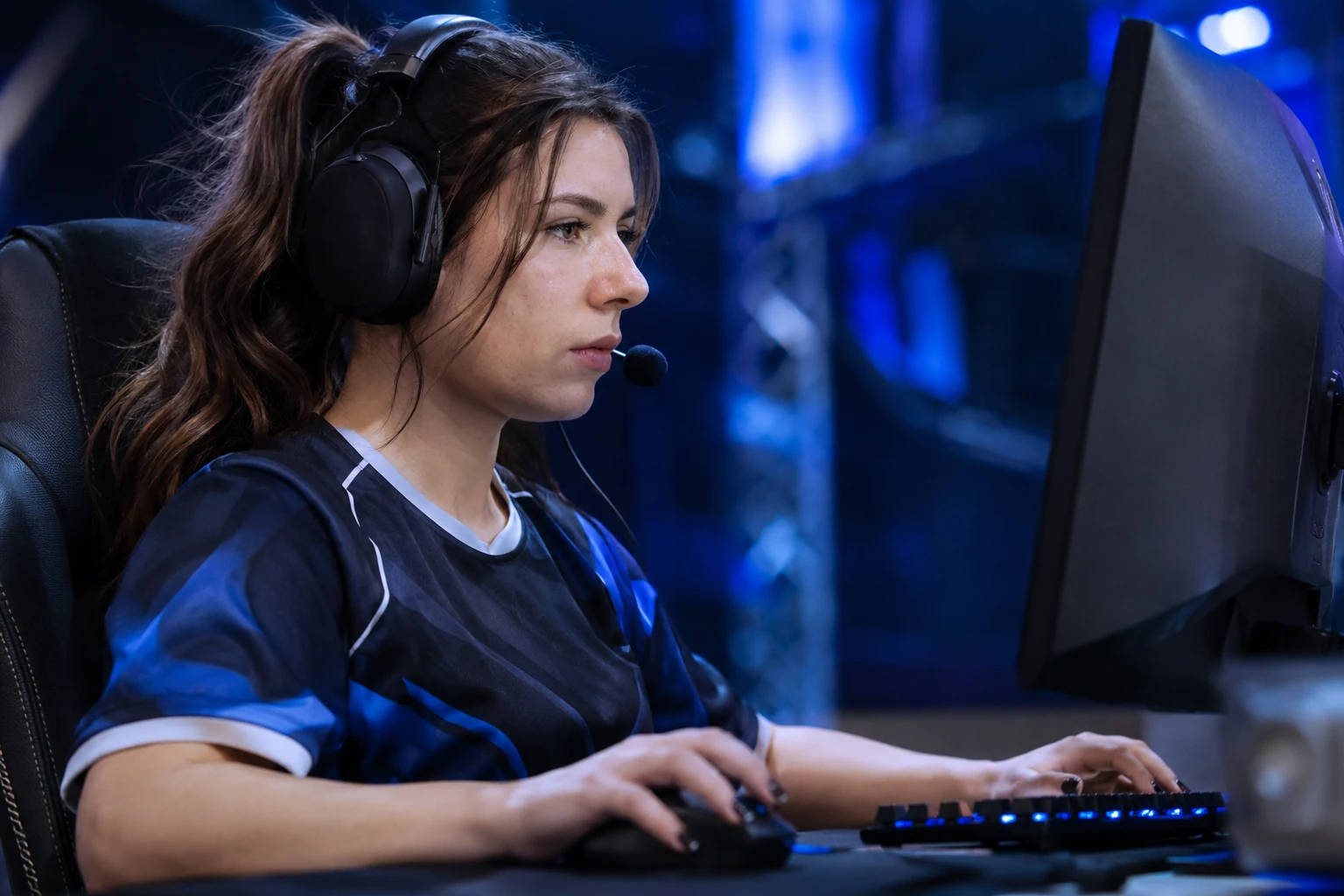
Tournament play begins with registration, either as an individual or a team. Organisers then assign participants to a bracket, group or league. In a round robin, entrants face several opponents; in single elimination, one defeat ends a run. Double elimination normally allows a second loss before elimination. A best-of-three is won by the first player or team to take two games or maps.
Teams may need to check in, test a connection and join a specified server before their match. Administrators resolve disputes; referees apply the rules. Coaches and analysts prepare players when those roles are allowed. Online matches happen from home, while LAN play adds travel and venue arrangements.
Distance can matter to a New Zealand team. Ping is network latency, and a distant or poorly routed server makes fast decisions harder to execute. Ethernet can steady a home connection, but won't shorten the distance to an overseas server. Check Oceania (OCE) qualifying rules, Australian server locations, time-zone clashes and international eligibility before entering.
A reliable computer or console and a working headset are enough for many beginners; responsiveness and tournament rules matter more than appearance. Hardware and software rules vary by title: a mobile game needs no gaming PC, while some PC events require particular peripherals or anti-cheat tools. Even a free event can mean transport costs, venue fees and time away from other activities.
How players improve without turning gaming into endless grinding
A high rank doesn't tell a coach everything. A VALORANT player with excellent aim may give unclear calls. In Rocket League, an individually skilled player can still overcommit and leave the goal open. Team practice exposes those habits better than solo queue.
Good practice has a purpose: warm up briefly, play ranked matches or scrims, then return to a few moments of VOD review. Was the in-game leader (IGL) clear? Did teammates trade? Was the objective lost to poor timing? Patches alter the meta, so teams need to reconsider successful strategies rather than repeat them blindly.
The NZESF training resources address sleep, exercise, hydration, recovery and burnout. More hours don't necessarily produce better play.
Kiwi players have reached international competition. Counter-Strike's Sean “Gratisfaction” Kaiwai and Rocket League's Cameron “Kamii” Ingram are two examples. Their careers took individual work and opportunities; they don't make a professional contract a likely result for every promising beginner.
Participation barriers: skill, teams, money and belonging
Most local competitors aren't earning a living from the game. In NZESF's 2025 esports survey, 81% of respondents reported winning no prize money. Among respondents, 56% said they didn't feel skilled enough, 38% didn't know how or where to enter, and 29% lacked a team. These are survey responses, not rates for every New Zealand gamer.
Beginners need understandable registration rules and welcoming divisions. Players without teammates need clubs and meeting places. Regional events and affordable access can matter more to the first-time entrant.
The survey also recorded 29% women and 2% non-binary respondents. NZESF compared that with a more gender-balanced group of people who play video games in New Zealand; the populations aren't interchangeable. Moderation, fair conduct policies and visible role models influence whether people feel comfortable competing, casting and organising.
Is esports suitable for children and teenagers?
For young players, school competition brings teammates and shared goals. Appropriate adult supervision, a code of conduct, safeguarding arrangements, sensible practice times and a clear way to report harassment are practical safeguards.
Check the game and the environment separately. New Zealand's Classification Office explains video-game ratings and restrictions, but a rating can't tell parents everything about voice chat, private messages or an unmoderated Discord server. An event may set a higher minimum age than the game itself.
Netsafe advises esports groups to agree on conduct standards, moderate spaces and deal with toxic behaviour. Privacy controls, two-factor authentication, secure accounts and a reliable way to report scams or threats all help. Cheating, match fixing and discriminatory abuse have no place in competition.
Heavy play alone doesn't establish a medical disorder. The World Health Organization defines gaming disorder through impaired control, gaming taking priority over other interests and continuing despite harm, with significant impairment to daily life. Lost sleep, declining schoolwork or damaged relationships deserve attention. Enjoying a tournament with friends is not itself a diagnosis.
Look at the ordinary week: enough sleep, school attendance, exercise, friendships and whether the player can stop at an agreed time. Adults chasing a rank need the same perspective.
Esports careers extend far beyond professional players
Events need administrators, referees, coaches, analysts, broadcast producers, observers, shoutcasters, video editors, graphic designers, community managers, moderators, marketers and volunteers.
Many of these jobs use skills from media production, information technology and event work rather than game development. A school stream involves camera work and audio mixing; a tournament bracket needs scheduling and fair dispute handling; managing a club Discord calls for moderation. Volunteers can build a portfolio even if their team doesn't reach a national final.
After a school final, someone still has to pack down the PCs, edit the footage and organise the next fixture.