On a Space Invaders cabinet, the aliens keep descending whether the player is ready or not. One coin buys a short chance to survive. The appeal of retro games lies partly in that direct challenge, but also in the cabinet artwork, joystick, electronic sounds and people waiting for a turn.
Aotearoa New Zealand has its own place in retro gaming history. Arcade machines appeared in dairies and fish-and-chip shops as well as dedicated “spacie parlours”. Home computers later gave local programmers an outlet, while consoles brought games into the lounge.
What counts as a retro game?
There is no agreed cut-off year for a retro game. The term spans older arcade machines, 8-bit and 16-bit systems, and early 3D games. Pac-Man, Super Mario Bros., Sonic the Hedgehog and the original PlayStation library qualify for most players. The PlayStation 2, Nintendo GameCube and original Xbox are retro to a younger generation.
Classic games earn their reputation through quality or influence. Retro gaming covers playing, collecting, restoring and sharing older games, including obscure ones. A remaster revises an existing release; a remake rebuilds it. A retro-inspired game is newer work shaped by older design.
Nor is pixel art a requirement. Early polygonal characters, pre-rendered 1990s backgrounds, arcade steering wheels and early-2000s optical discs all belong to the retro landscape.
From spacie parlours to the family television
The 20-cent arcade era
Electronic arcade games reached New Zealand in the 1970s. By the 1980s, Space Invaders might sit beside the counter at a takeaway, while Wizards, Doghouse, Fun City, Time Out and Timezone offered rooms of machines. The nickname spacie parlour came from Taito’s alien shooter. Some sessions cost 20 cents; skilled players tried to make each coin last.
Even a single-player cabinet drew a crowd. Onlookers studied high scores, traded tactics and queued for their turn. Asteroids, Galaxian, Galaga, Frogger, Donkey Kong and Pac-Man demanded different skills, from anticipating movement to memorising routes. Auckland and Wellington had major venues, but smaller towns had their own machines.
Te Ara’s history of arcade and computer games in New Zealand documents cabinets in movie theatres, camping grounds, dairies and fish-and-chip shops. Its 1982 photograph of Auckland’s Space World also captures the crowd around the games.
Double Dragon made playing together a draw. Later, Street Fighter II, Mortal Kombat and Tekken made the waiting challenger part of the spectacle. That competitive streak survives in tournaments and speedrunning, even when the cabinet has disappeared.
New Zealand created its own games and hardware
New Zealand produced hardware as well as players. Early home consoles included Sportronic, Tunix, Fountain and Videosport. Auckland arcade manufacturer Kitronix built games including Malzak and Panix.
The Sega SC-3000 is central to that local history. Released in 1983, the home computer developed a New Zealand following despite limited success in many other English-speaking markets. Distributor Grandstand supported it with the Sega Computer magazine, BASIC material and user groups. Bits and Bytes covered the broader scene, including the Sinclair ZX Spectrum, TRS-80, System 80 and Commodore 64.
With a magazine listing and enough patience, a player could type in a game rather than buy it. Clubs swapped ideas, and local developers wrote their own software. City Lander, Burglar Bill and One Day Cricket came out of that world. On Atari 8-bit computers, Andrew Bradfield and Harvey Kong Tin developed Laser Hawk and Hawkquest, ambitious New Zealand productions for constrained machines.
Melanie Swalwell’s account of 1980s hobbyist computing traces an SC-3000 scene sustained by clubs and local publishing, far from the familiar story of dominant global console brands.
Consoles moved play into the lounge
The Atari 2600 brought cartridges to the family television, while home computers made programming part of play. The Nintendo Entertainment System (NES), Sega Master System, Super Nintendo (SNES) and Sega Mega Drive followed with memorable side-scrolling games and local multiplayer. Compare the measured level design of Super Mario Bros. 3 with the speed of Sonic the Hedgehog 2: both are platformers, but they feel quite different.
The Game Boy put Tetris and longer adventures in a school bag for car trips and holidays. Game Boy Color and Game Boy Advance extended portable play. Meanwhile, the Nintendo 64 and Sony PlayStation popularised 3D worlds and new ways of telling stories. Super Mario 64, The Legend of Zelda: Ocarina of Time, Final Fantasy VII and Crash Bandicoot offered more than another attempt at a high score.
Collectors now seek the Dreamcast, PlayStation 2, GameCube and original Xbox alongside much older cartridges.
Which retro games still feel good to play?
Five minutes with Pac-Man is a different commitment from an evening in Ocarina of Time.
| Playing mood | Games to know | Why they endure |
|---|---|---|
| Five-minute arcade challenge | Space Invaders, Pac-Man, Galaga | Clear rules, fast restarts and scores that make progress visible. |
| Precision platforming | Donkey Kong, Super Mario Bros. 3, Sonic the Hedgehog 2 | Movement is the skill; timing and level knowledge reward repeated attempts. |
| Puzzles and portable play | Tetris, Dr. Mario, Columns | Simple systems create variety without long tutorials. |
| Two-player rivalry or teamwork | Street Fighter II, Double Dragon, Streets of Rage 2 | Another person changes the experience more than better graphics could. |
| Exploration and adventure | The Legend of Zelda: A Link to the Past, Super Metroid, Ocarina of Time | Interconnected worlds reward curiosity, memory and observation. |
| Early 3D and the couch multiplayer era | Mario Kart 64, GoldenEye 007, Tekken 3 | Distinctive control schemes and shared-screen competition carry their own history. |
Original releases can be unforgiving. Arcade games were built for brief, demanding sessions; some console titles offer few saves, strange button layouts or awkward cameras. Those features tell us something about their era, but they need not be compulsory. A licensed version with rewind or save states lets newcomers learn without starting over every time.
Why retro gaming remains a living culture
Nostalgia has its place: an opening sound or cartridge label can bring back a living room or a school holiday. But first-time players can get just as caught up in Galaga, or in the slower, deliberate exploration of Super Metroid. The appeal is not restricted to people who remember the original machines.
Limited memory, colours and buttons pushed early designers towards readable characters and immediate feedback. The best games make the consequences of a missed jump or mistimed attack obvious. Plenty of old releases are repetitive, obscure or needlessly difficult, though. Age is no guarantee of good design.
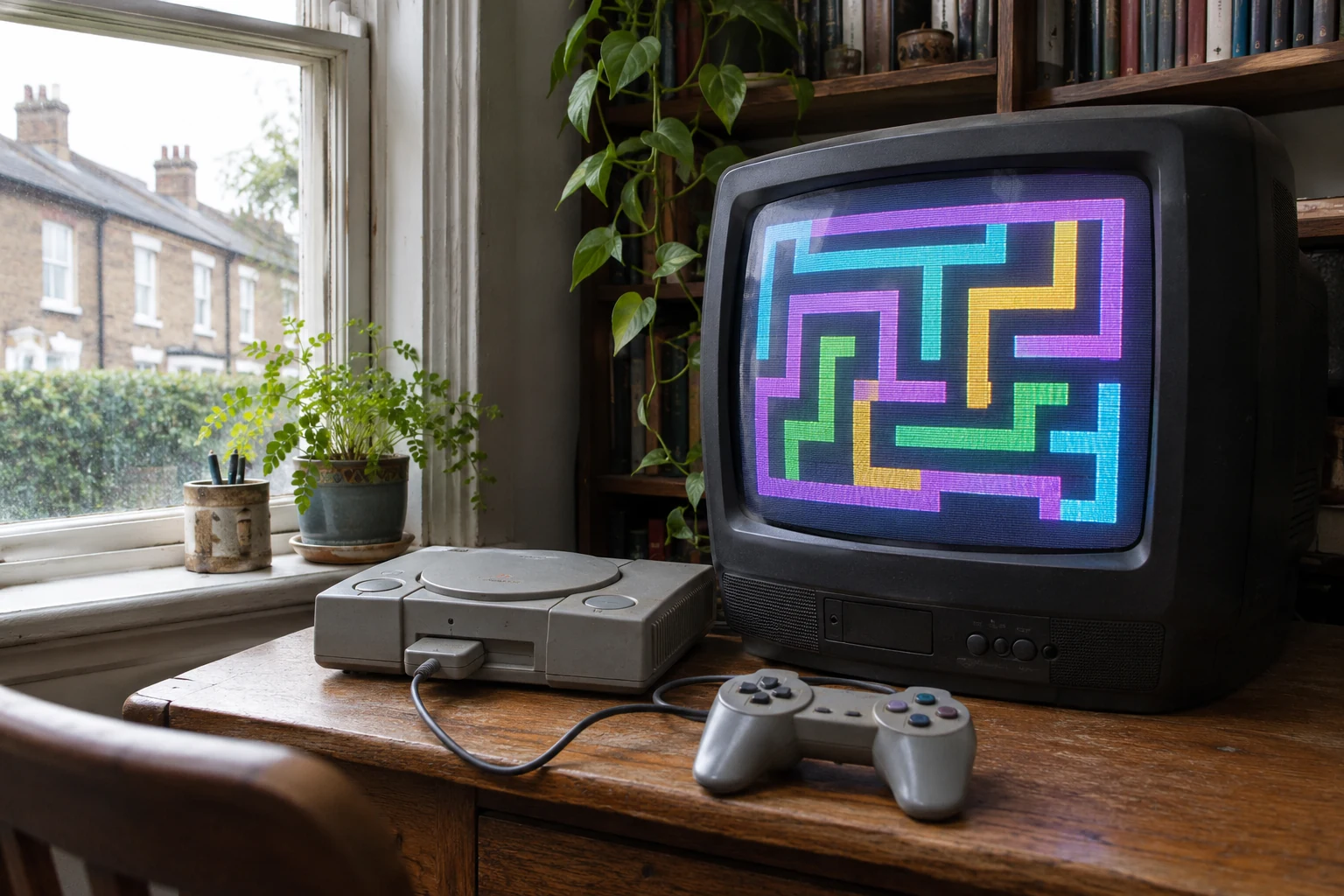
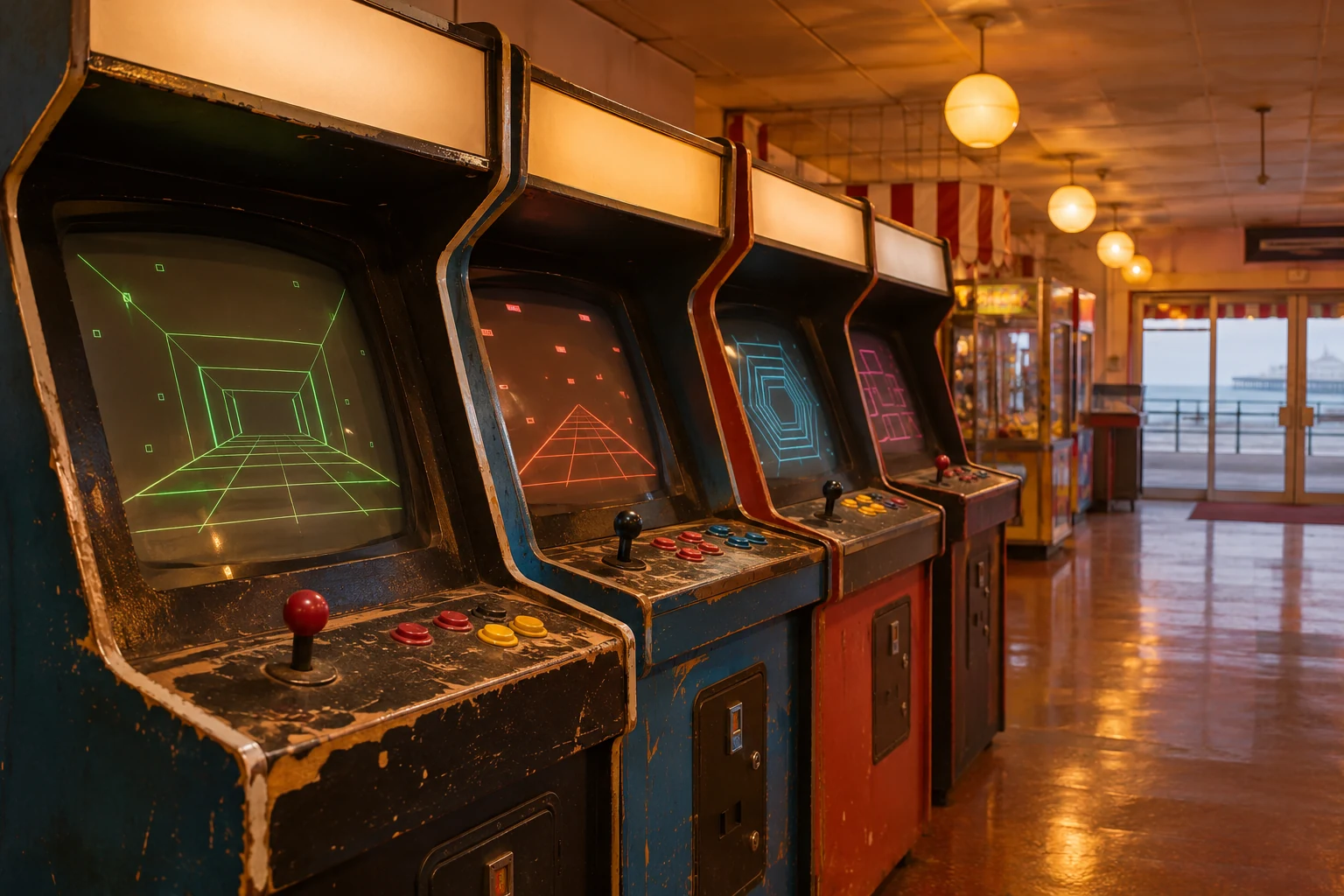
How a game feels also comes from its equipment. The glowing marquee of a cabinet, an arcade stick’s resistance, a controller’s click and the picture from a cathode-ray tube (CRT) all change the experience. High-score contests, cooperative play, speedrunning, pixel-art communities, chiptune music, fan translations and homebrew development keep that culture active long after the original release.
New Zealand artists have brought their own perspective to it. Dunedin hosted a Retro Games Lounge in 2016; Wellington’s 2023 Arca exhibition included playable cabinets built by Preston McNeil. Artists Gina Kiel and Joe Sheehan took part, and Sheehan’s pounamu joystick tops gave the hardware a distinctly local detail.
How to play retro games in New Zealand now
Original equipment makes sense when the period controller and display are part of the attraction. Licensed modern releases remove much of the setup.
| Option | Best suited to | Trade-off to understand |
|---|---|---|
| Original console, cartridge or disc | Collectors and players interested in period controls, accessories and hardware behaviour | Condition, region compatibility, maintenance and connection to modern TVs. |
| Official re-releases and game collections | Playing selected classics with little technical preparation | Game versions and features differ; not every title has been reissued. |
| Console subscription libraries | Trying several older games without building a physical collection | Access depends on the subscription, supported device and changing catalogue. |
| Mini consoles and modern retro handhelds | Compact, controller-focused play | Screen quality, latency, licensed game selection and device support vary. |
| Emulation on a computer or other supported device | Exploring compatible software and preserving flexible play setups | Configuration can take effort; game files have separate copyright considerations. |
Nintendo Switch Online offers NES, SNES and Game Boy libraries. The Expansion Pack adds selections from Nintendo 64, Game Boy Advance and Sega Mega Drive; Nintendo GameCube classics require Switch 2. The games available depend on region, console and membership, and access ends with the subscription. See Nintendo Classics information for the supported libraries.
In New Zealand, PlayStation Plus Deluxe includes a Classics Catalogue for supported modern consoles. The selection can change, and subscription access is not ownership of an original disc. The local NZ PlayStation catalogue identifies the available plans and titles.
Outside subscriptions, there are licensed collections, digital rereleases and remasters. Some closely reproduce the originals; others change the graphics, music, difficulty or controls.
The details that catch New Zealand retro players out
PAL, NTSC and the 50 Hz question
Many older New Zealand consoles used PAL video, commonly associated with 50 Hz. 60 Hz NTSC variants were widespread in Japanese and North American hardware. Some PAL game conversions ran slowly or acquired screen borders; others were adapted for the local standard. Check the specific game and console rather than judging by the label alone.
Region locking is a separate obstacle. A cartridge may fit without booting, and discs can be locked to another region. Imported consoles also need the correct power supply. Never connect Japanese or US equipment straight to New Zealand mains without checking the model’s voltage requirements, polarity where relevant, and video connection.
A working CRT suits many analogue-era consoles. With a modern HDMI television, a low-latency upscaler usually handles the signal better than a simple cable converter. A television’s game mode can reduce added processing delay.
Second-hand games are not all in the same condition
Trade Me, specialist second-hand shops and private sales offer older hardware across New Zealand. Scratched discs, worn controller ports, loose sockets and dead save batteries can turn a purchase into a repair job.
- Cartridges: check the contacts, shell, label, region and whether the game runs. Battery-backed saves can fail even when gameplay works.
- Discs: check for scratches, cracks near the centre ring and evidence that the correct disc is inside the case.
- Consoles: confirm the specific model, included cables, controller response, video output and power requirements.
- Collectables: distinguish original packaging and licensed cartridges from reproductions, replacement cases or aftermarket accessories.
Legal protection also depends on who sells the item. Consumer Protection guidance on second-hand goods explains that purchases from traders generally have protections under the Consumer Guarantees Act; private sales have fewer. “Untested” tells you nothing about whether the hardware works.
Old games are not automatically free to download
Emulation runs software written for another system; an emulator is not the same thing as a game file. Owning a cartridge or finding a long-abandoned ROM online does not automatically give permission to copy or download it. New Zealand’s Copyright Act 1994 includes rules for computer programs, and the rights holder’s licence and the source of the file remain relevant.
Licensed rereleases, rights-holder downloads and authorised archives are clearer options than treating every ROM online as free.
Preserving the games—and the memories around them
What happens to a game when its publisher disappears, the hardware fails and the download is removed? A 2023 Video Game History Foundation study reported that 87% of classic games released in the United States were no longer commercially available in the market it assessed. It did not measure New Zealand availability.
Keeping code is not the same as keeping history. Manuals reveal how players were expected to learn; old reviews show what critics thought at the time. Cassette inlays, packaging, advertisements, club newsletters, photographs and interviews record where games were made, sold and played. Without that material, even a working copy can lose much of its local meaning.
That matters especially for New Zealand titles that had little overseas distribution. The Play It Again project documented by Ngā Taonga Sound & Vision investigated early games from New Zealand and Australia and the people who made them. Communities including SC-3000 Survivors preserve manuals, technical knowledge and memories of systems that might otherwise be forgotten.